
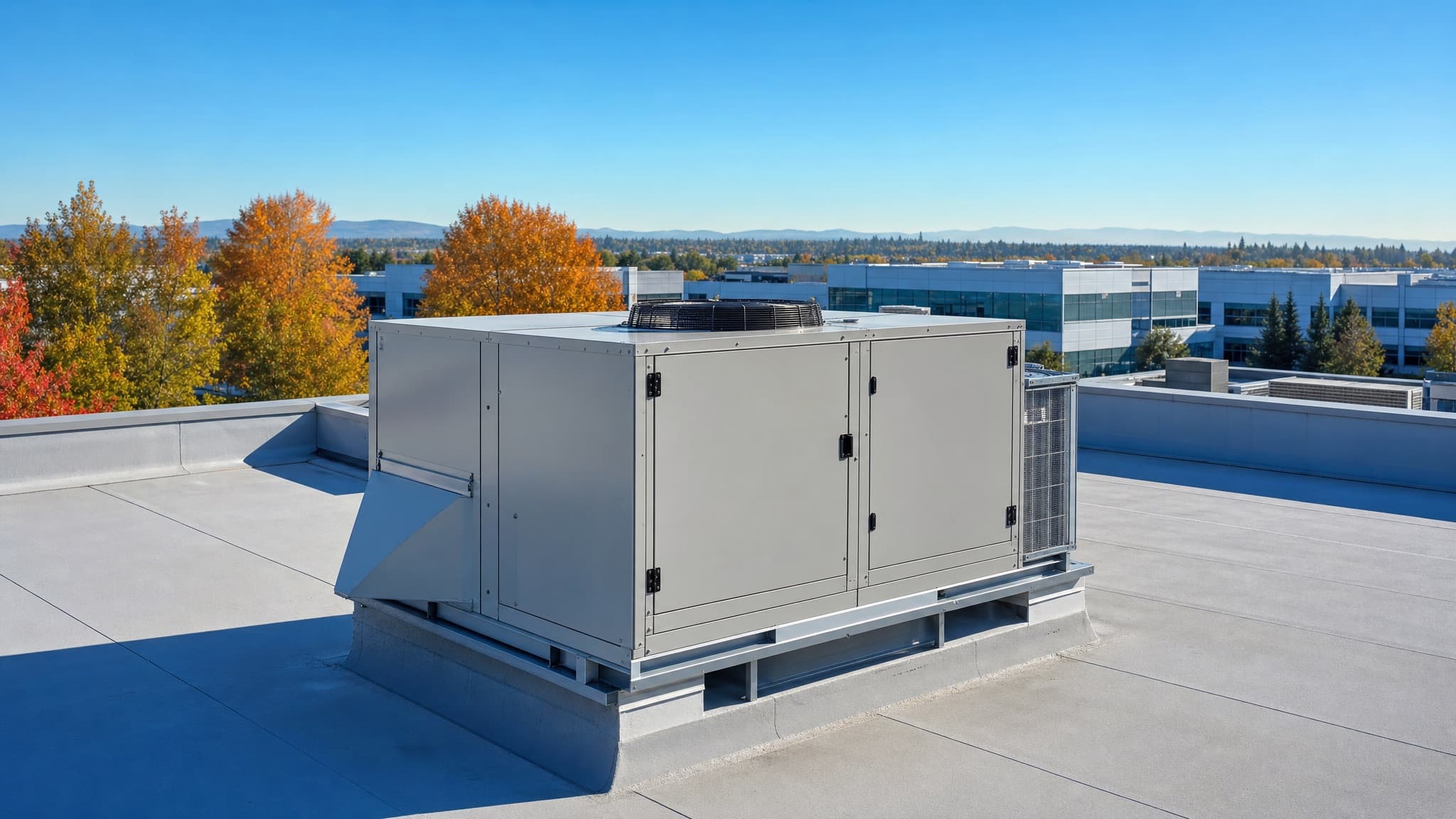
A pre-winter heating tune-up is a scheduled visit before the cold arrives: the rooftop unit or split system gets inspected, cleaned, and checked, any findings get flagged, and you get a dated, line-item record of what was done. The best time for it is a mild fall day, before the first cold morning asks the heat to run for the first time in months. Before the visit, run the heat once yourself and write down what you notice.
This is written for a commercial tenant in a leased suite. It is not advice about your lease.
Why before the first cold morning
Most heating systems sit unused from spring until the first cold snap. That first morning is when every suite in the building turns the heat on at once, and it is the worst time to find out yours does not work. A tune-up on a mild day turns that surprise into a scheduled visit, with time to fix whatever turns up.
Run the heat once yourself
Pick a mild afternoon and give the system a short test before anybody comes out.
- Set the thermostat to heat and raise the setpoint a few degrees above the room.
- Stand under a supply vent. Note whether air moves and whether it turns warm.
- Walk the suite. Note any office, back room or corner that stays cold.
- Listen and smell. Write down any new sound, and any smell that does not go away.
- Look at the thermostat screen. Photograph any message or code.
If anyone smells gas, stop. Get everyone out. From a safe distance, call 911 and your gas utility, as Atmos Energy's gas leak guidance advises.
What the visit covers
A scheduled maintenance visit is straightforward:
- Inspect the unit
- Clean it
- Flag findings
- Leave you a dated, line-item record
That record goes in your lease file, next to the last one. See scheduled HVAC maintenance to get on the schedule.
A tune-up is not a repair call
If the heat already will not come on, or the air will not warm up, that is a repair call, not a maintenance visit. Start with what to check when a rooftop unit will not heat, then see heating and HVAC repair for the fix.
What to write down before the visit
- When the heat last ran. Last winter, last week, or not since spring.
- What your test showed. Air or no air, warm or not, and which rooms stayed cold.
- Any sound or smell, and whether it went away.
- What the thermostat said, with a photo of any message.
- The last service record, if you have one. If you do not, what a usable record looks like is worth reading.
Part of the freeze-ready checklist
Heat is one of three things worth settling before the first hard freeze. The other two are water and power. The full list is in the DFW freeze-ready checklist.
Any work beyond the original quote gets approved by you, in writing, before we start.