
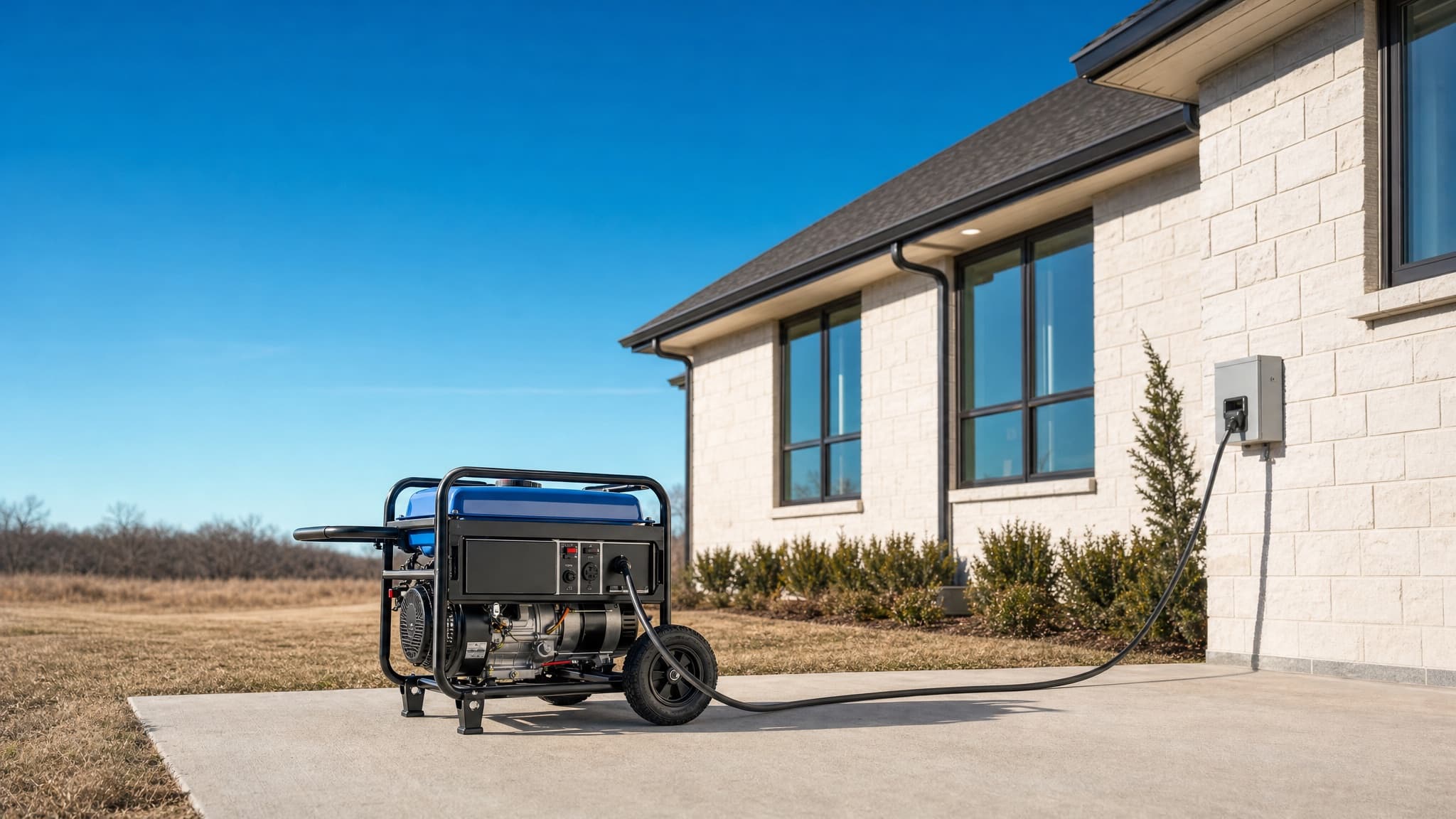
When the power goes out on a cold night, a portable generator with a proper hookup can usually keep the basics running: most HVAC systems, the fridge and the freezer. It will not run the whole house at once the way a permanent standby unit does. The difference between a calm night and a bad one is deciding what goes on the list before the first freeze, not after the lights go off.
This page is for a home. It covers planning and safe use. How the hookup is installed, and how the 30 or 50 amp circuit is sized, is in how a portable generator hookup works.
What a hookup changes on outage night
Without a hookup, a portable generator powers whatever you can reach with an extension cord, one appliance at a time, with a cord running through a door or window.
With a hookup, the generator feeds circuits at your main panel through an inlet on the outside wall and an interlock that keeps it and the utility from ever feeding the panel at the same time. That is how the HVAC, which has no plug to reach, ends up on the list at all.
What it usually reaches
A hookup tops out at 50 amps. Up to 50 amps usually reaches the basics in an average household: most HVAC systems, the fridge and the freezer. The things that spoil, freeze or make a place unlivable are the things it is for.
It is not the same machine as a whole-home standby unit, and nobody should tell you it is. Be specific about the list up front, so the first night is not when you find out what fits.
Make the list before the freeze
Write it down while the power is on. A short list beats a long wish.
- Must run. The HVAC, the fridge, the freezer.
- Nice to have. A few outlets for phones, a lamp, the internet router.
- Off during the outage. Anything big you can live without for a night.
Bring that list to the portable generator installation estimate. It is what decides whether a 30 or 50 amp circuit covers you.
Stage the fuel and the generator now
A dual-fuel portable runs on gasoline or propane.
- Gasoline is the same fuel as the lawnmower, with nothing to plumb.
- Propane runs off a grill tank and does not go stale the way gasoline does, so a spare tank bought today is still good on the night you need it.
Decide which fuel you can actually get your hands on during a long outage in your neighborhood, and have it on hand before the cold arrives. Start the generator once before the season so the first start is not in the dark.
Switching over, in order
- Roll the generator outside to its spot, well away from the building, windows and doors.
- Connect the one cord from the generator to the inlet.
- Start the generator.
- At the panel, switch the main off, then use the interlock to switch the generator breaker on.
- Turn on the circuits from your must-run list, one at a time.
When utility power comes back, reverse it: generator breaker off, main back on, then shut the generator down. The interlock means there is never a position where both are live, which protects your equipment and the line crews restoring power.
Carbon monoxide is the part that is not optional
A portable generator burns fuel, and burning fuel makes carbon monoxide. Never run one indoors, in a garage, in a basement, or near an open window or door. Not with the garage door up either. Outside, away from the structure, every time.
The unit we install has a carbon monoxide alert built in. Treat it as a backstop, not as permission.
The rest of the freeze checklist
Power is one of three things worth settling before the first hard freeze. The other two are on the DFW freeze-ready checklist.
When you are ready
See portable generator installation for what the install includes and to book the free on-site estimate. Bring the list.
Any work beyond the original quote gets approved by you, in writing, before we start.