
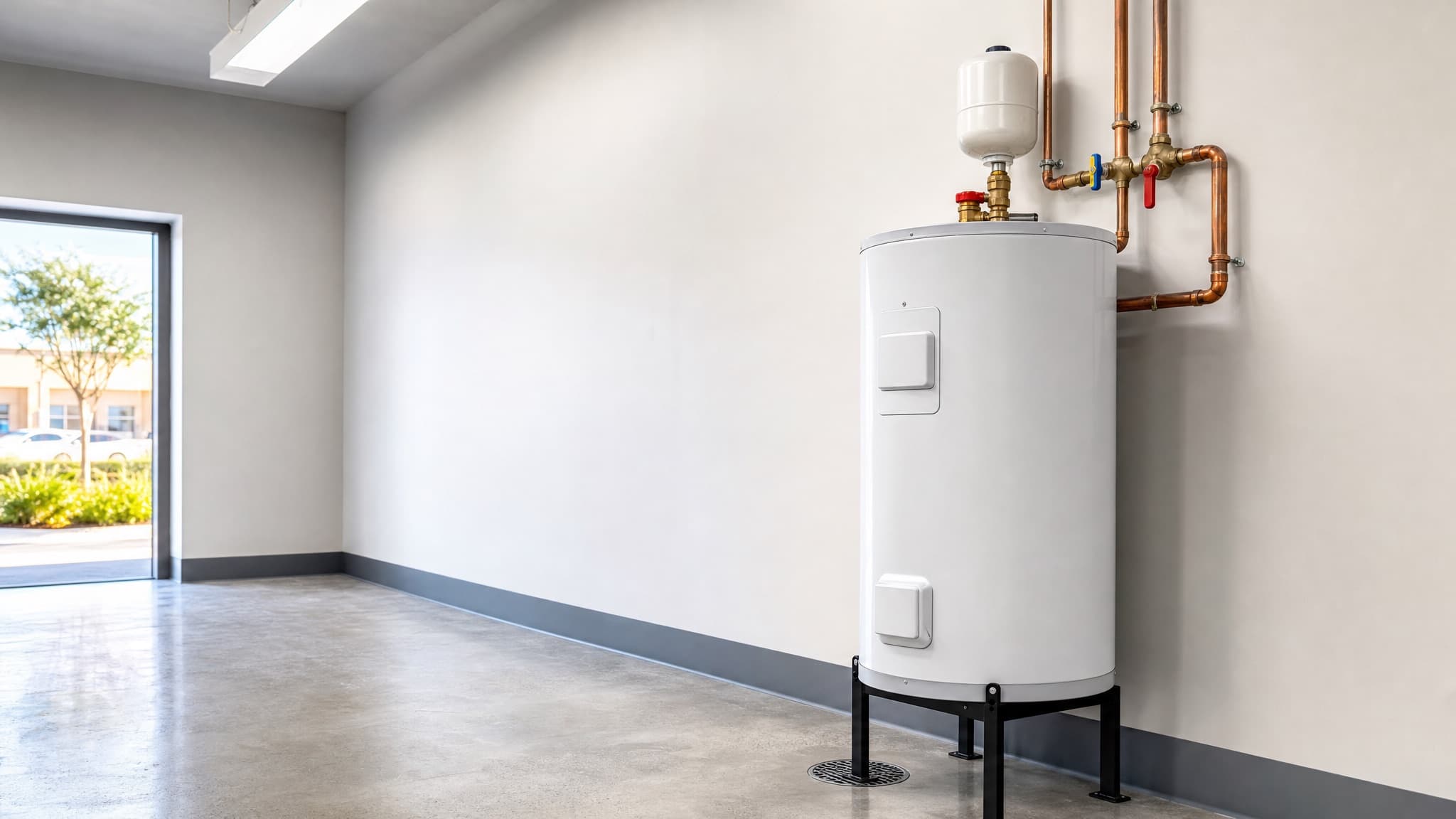
Somebody washes their hands and the water never warms up. Or the kitchen sink runs lukewarm and then cold. Either way the water heater has stopped doing its job, and the useful question is not what broke inside it. It is what you can see and describe from where you are standing, because that is what turns a vague call into a scheduled one.
This page is about noting and writing down. It is not a repair procedure and it is not advice about your lease.
If anyone smells gas, stop here
Get people out of the space and call your gas utility from outside, using the number on your gas bill. Everything else on this page can wait.
Start with the symptom
Before you look at the unit, pin down what people are actually seeing.
- No hot water at all, or water that only gets lukewarm.
- Hot water that runs out fast, where it was fine yesterday.
- Only some fixtures, such as the restroom but not the kitchen, or the reverse.
- Since when. This morning, over the weekend, or slowly over the last few weeks.
If only one fixture is cold, say so. That is a different call from a whole suite with no hot water.
Look at the unit, without opening it
Find the water heater and look from where you can stand comfortably. Do not climb, and do not open anything.
- Water on the floor. Is there any around the base, and does it look like it is coming from the tank or from a pipe above it? Take a photo.
- The label on the side. Most units carry a label with the make, model and serial number. Take a clear photo of it. It is the single most useful thing you can send.
- Gas or electric. If you know, note it. If you do not, a photo of the whole unit and the pipes above it usually answers the question for whoever comes out.
- Sounds and smells. Anything unusual, and whether it is happening now or happened earlier.
Look at the breaker, once
The panel door is fine to open. The cover behind it is not.
If the water heater is electric and the panel directory shows a breaker for it that has tripped, take a photo before you touch it. If it trips again after one reset, leave it off and say so when you call. Our post on a breaker that keeps tripping explains why another reset does not help.
What not to touch
- Do not open any cover or access panel on the unit.
- Do not try to relight it.
- Do not drain it.
- Do not turn or lift any valve on the tank.
- Do not move anything that is stored against it while water is on the floor.
None of those makes the call go faster, and some of them make the visit start with a second problem.
The five things worth writing down
- The symptom. No hot water, lukewarm, or running out fast, and at which fixtures.
- When it started. And anything that happened around then, such as a power outage, a tripped breaker, or other work in the space.
- Water on the floor. Where, and whether it is still spreading, with a photo.
- The label. A clear photo of the make, model and serial number.
- Anything unusual. A smell or a sound, and when you noticed it.
If you have a record of when the unit was last serviced or replaced, have it nearby.
When to stop
- If anyone smells gas, leave and call your gas utility from outside.
- If water is spreading, close the water shutoff to your suite if you already know where it is, and make the call.
- If the breaker trips a second time, leave it off.
When you are ready to call
See commercial plumbing service for what we handle, including commercial water heater service and replacement. Bring the list and the photos.
For the rest of the pre-freeze checklist for a leased suite, see the DFW freeze-ready checklist.
Who is responsible for a water heater is a question for your lease. For the wider set of operating questions a triple-net lease hands you, read the triple-net tenant guide.
Your lease is the final word on what it requires and who arranges it. This page describes the usual pattern and does not interpret your document.
Any work beyond the original quote gets approved by you, in writing, before we start.