
Every light in the suite goes out at once. The computers drop, the registers go dark, and the break room goes quiet. The first useful question is not what broke. It is whether the problem is out on the utility's lines or inside your own space, because those are two different calls to two different people.
This page is about looking, checking and writing down. It is not a repair procedure and it is not advice about your lease.
If wires are down or something smells like burning, stop here
If you see power lines down outside, leave the area and call 911. Oncor's outage questions page says never to approach, touch or try to move a downed power line or anything in contact with one.
If you smell burning, see scorch marks, or hear anything from the panel, keep people away from it and make the call from somewhere else. Everything else on this page can wait.
Look outside your suite first
- The suites next door. Are their lights on?
- Shared spaces. Hallway lights, the parking lot lights, and the sign on the building.
- The street. Traffic signals and the businesses across the way.
If everything around you is dark too, it is most likely the utility. If your neighbors have power and you do not, do not rule the utility out yet. Oncor says a neighbor can be on a different set of lines or circuit, so one business can be out while the one next to it is fine.
Check with the utility
If Oncor delivers power to your building, its outage map shows reported outages, and you can report an outage online. Oncor says its systems know about an outage only if they detect it, so reporting yours is worth doing. If you are not sure which utility serves the building, your property manager will know.
Have your electric bill handy. Oncor asks for the ESI ID number printed on it when you report an outage.
Look at your panel, once
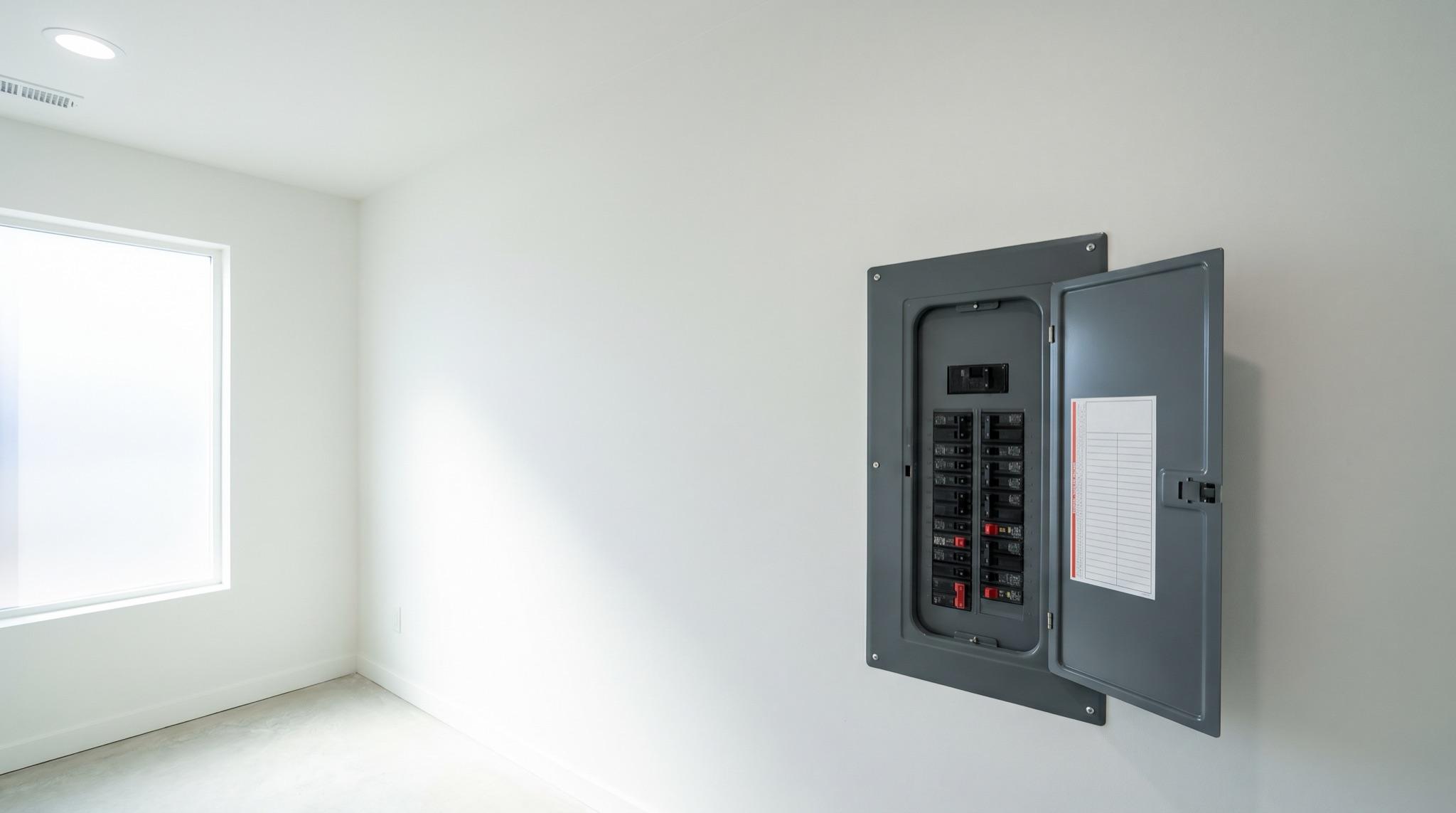
Oncor's meter check steps start in the same place: check your breaker panel for any breaker that may have tripped off.
- Open the panel door, not the cover behind it. The door is fine. The cover is not a tenant's job.
- Look for a main breaker. If the panel has one, it is often larger than the rest and set apart from them. Note whether it sits in a different position from the others.
- Take a photo of the whole panel and its directory before you touch anything.
This page does not ask you to reset a main breaker. If the main looks tripped, photograph it, leave it, and make the call.
If only part of the suite is out and the rest still works, that is a single circuit, not the whole suite. Our post on a dead outlet or a breaker that keeps tripping covers that one.
Look at the meter, without touching it
If you can see the meter for your suite without opening or unlocking anything, Oncor says to check the display. A meter with no display showing suggests the power may be out at the utility's end. Oncor also asks you to call it if you see visible damage to the meter base.
Do not touch the meter. Oncor's same page says breaking a meter seal or removing a meter can be treated as tampering, which is illegal and dangerous.
What not to do
- Do not open a panel cover.
- Do not reset the main breaker.
- Do not touch the meter or break its seal.
- Do not run an extension cord from another suite to keep something running.
- Do not run a generator inside. The CDC's power outage guidance says never to use generators, grills or other gasoline, propane or charcoal burning devices indoors or near doors, windows or vents.
The five things worth writing down
- When it went out. And whether it went all at once or flickered first.
- What is out. The whole suite, or only part of it.
- What the neighbors see. Whether the suites next door and the shared lights are out too.
- What the panel shows. A photo of the panel, the directory and the main breaker.
- What the utility says. Whether the outage map shows an outage, and when you reported yours.
When you are ready to call
If the utility shows no outage and your suite is still dark, see commercial electrical service for what we handle, including panel issues, bad breakers, and breakers that will not reset. Bring the list and the photos.
Who is responsible for the panel and the wiring in your space is a question for your lease. For the wider set of operating questions a triple-net lease hands you, read the triple-net tenant guide.
Your lease is the final word on what it requires and who arranges it. This page describes the usual pattern and does not interpret your document.
Any work beyond the original quote gets approved by you, in writing, before we start.