Big Dog
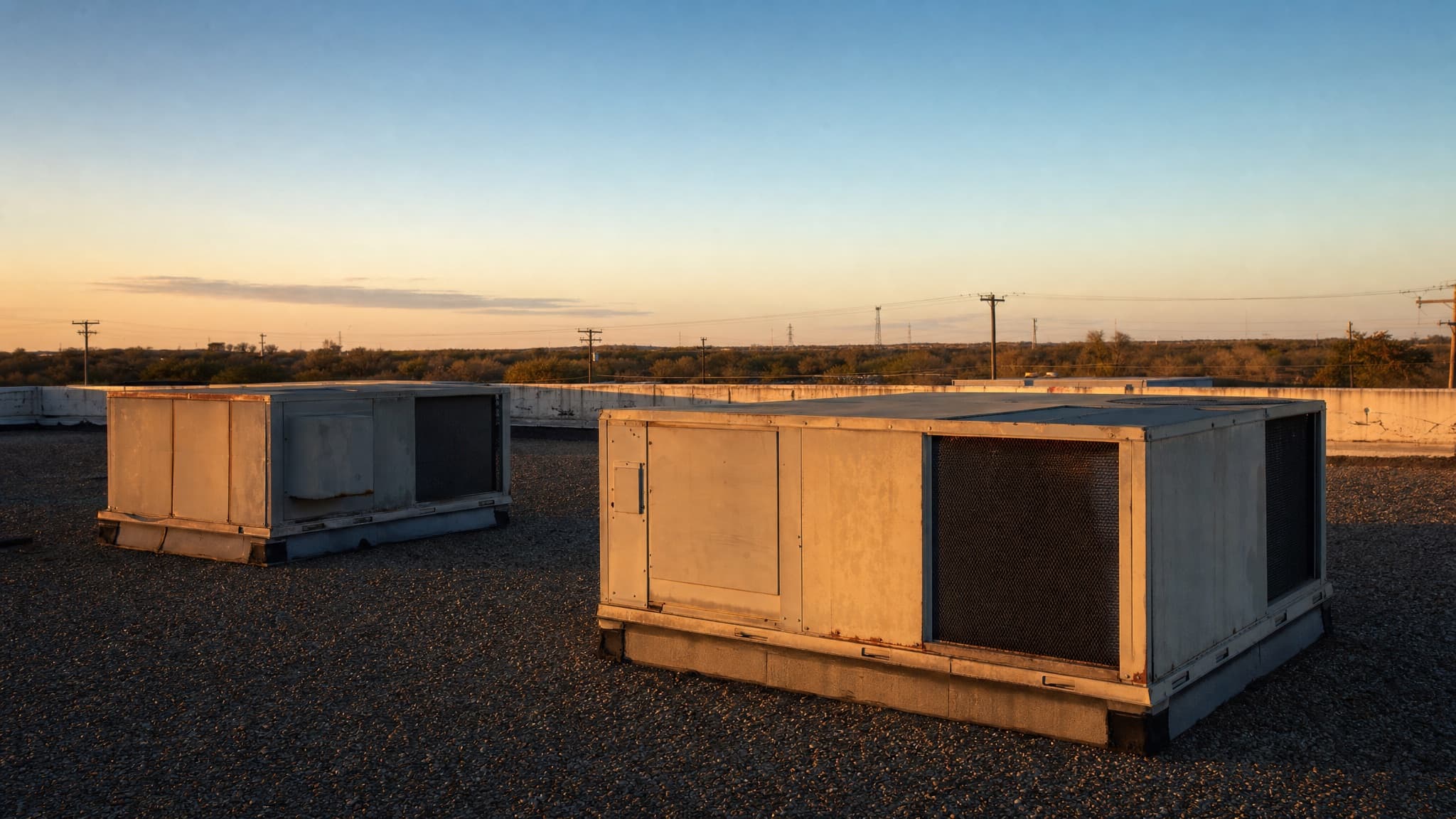
Two weathered rooftop package units on the gravel-ballasted roof of a low-slope commercial building at sunset, with a flat treeline and utility poles on the horizon.

Insights

Rooftop Unit Maintenance: What Your Lease Requires

Most commercial leases put rooftop unit maintenance on the tenant, usually a twice-a-year inspect-and-clean. Here's what that clause typically requires and what happens when it slides.

Most commercial leases put rooftop unit maintenance on the tenant, not the landlord. If your building has a package unit on the roof serving your space, the lease almost certainly has a clause requiring it to be inspected and cleaned on a schedule, usually twice a year, whether or not anything is broken.

Tenants tend to find that clause the same way they find the rest of the lease: late, and usually because a unit just quit on a 100° afternoon.

Why a rooftop unit gets its own maintenance clause

A rooftop unit, or RTU, sits outside, runs constantly through a Texas summer, and serves only the space under it. Landlords who write NNN leases push that upkeep onto the tenant for the same reason they push through property taxes and CAM: the equipment is dedicated to your space, so the cost of keeping it running is yours.

That's different from a repair. A repair is what happens after the unit fails. Maintenance is the service obligation that's supposed to keep the repair from happening as often, or as early. It's owed on the calendar, not on a breakdown.

What the twice-a-year interval usually covers

The interval written into most commercial leases is twice a year: once before cooling season, once before heating season. When a lease requires "HVAC maintenance" or an "inspect and clean," that's the cadence it's describing.

The visit itself is meant to catch small problems before they become expensive ones: a unit running hotter than it should, a component showing early wear, anything that would otherwise go unnoticed until the compressor gives out in July. It's a checkup, not a repair call.

What happens when it slides

Nobody schedules a maintenance visit for fun. It's a line on page 14 of the lease, and there's an actual business to run, so it slides. Two things tend to go wrong when it does.

The unit fails earlier than it had to. Rooftop units in the older DFW commercial stock, meaning 1950s and 1960s strip retail, light industrial, and small office park, are frequently well past their easy years already. A unit like that gives you warning signs before it fails outright. Nobody's up there to see them without a scheduled visit.

The other problem shows up later, at a landlord conversation. If your lease requires proof of maintenance and you can't produce service records, that's a harder conversation than the maintenance visit would have been. It can also complicate a CAM reconciliation or an end-of-lease walkthrough.

How to tell if it's on you

Look for a maintenance or service clause in the HVAC section of your lease, separate from the repair clause. It typically specifies a frequency, usually twice yearly, and may require documentation you can produce on request. If the lease is silent or the language is genuinely ambiguous, that's a question for your landlord in writing, not a guess. For the fuller breakdown of how HVAC, electrical, and plumbing responsibility typically splits under a Texas triple-net lease, see what your lease requires for all three trades.

Your lease is the final word here. This page describes how that clause usually reads in DFW commercial leases. It isn't a substitute for reading yours.

What we do when you're on the schedule

We run the twice-a-year visit on a schedule we track, not on whatever gets remembered. Inspect the unit, clean it, flag what we find, and leave you a dated line-item record for the lease file, the same document a landlord asks for when they want proof. See commercial HVAC maintenance for what the visit covers and to get on the schedule.

If the unit is already down instead of due for a checkup, that's a repair call, not a maintenance one. See commercial HVAC.

Something broken now?

Call us or fill out the form. We answer the phone.

CallEmail